
The Date-Indexed Upson County Arrest Log
The Sheriff's site links out to the Interop system that hosts Upson jail data. Its wider lookup is labeled Inmates By Arrest Date. Set your own dates. The results can run long, since a broad window once returned 11 pages holding 108 entries. Those counts shift constantly. For the source itself, open the Inmates By Arrest Date search.
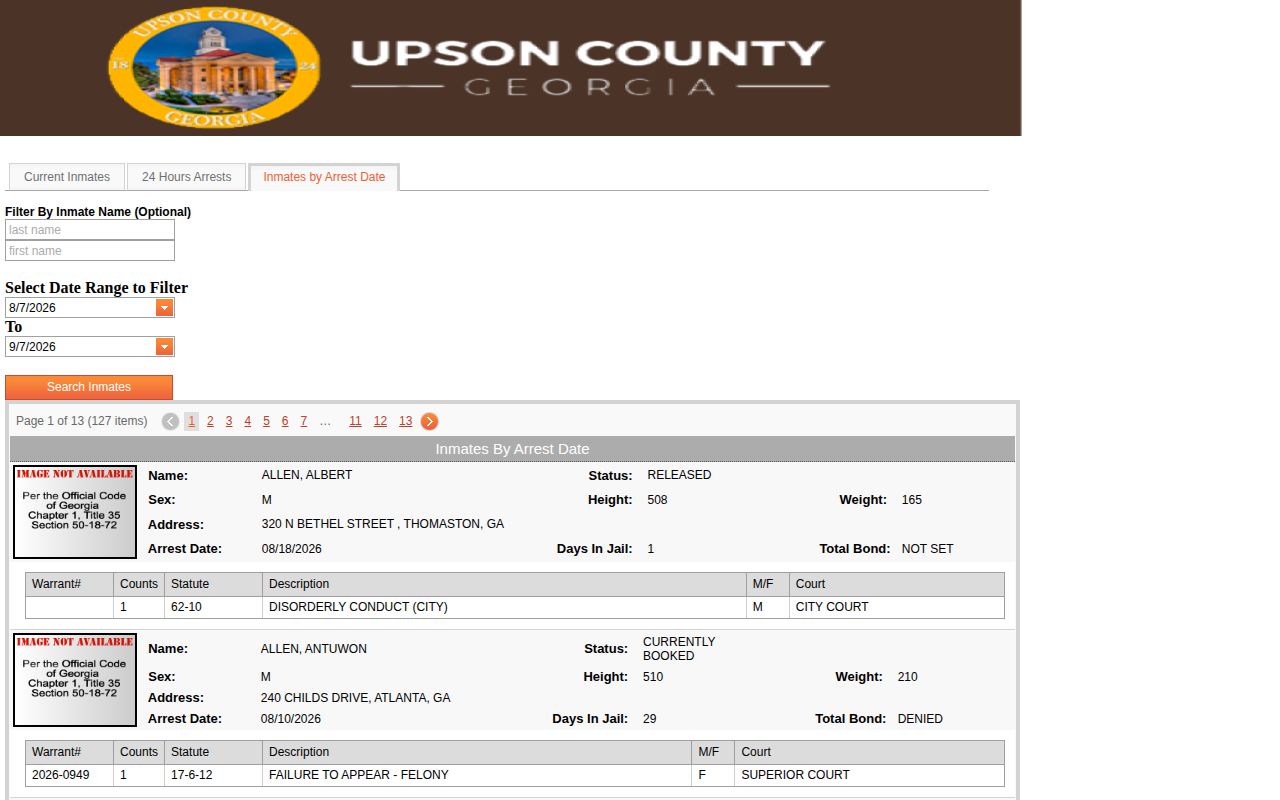
Your dates drive it; no weekly report is preset.
How to Read the Upson County Blotter
- Open the official arrest-date page.
- Enter From and To dates that cover the likely booking day. Begin with one day or a short interval.
- Add the name when known. If no result appears, verify spelling and try a shorter name form.
- Review every results page. Pagination means the first screen may not contain the desired row.
- Compare identity descriptors, arrest date, agency, charges, court, bond, and status.
- Record the exact row details and retrieval date if contacting the Sheriff or court.
A very recent arrest shows up on the Arrests Last 24 Hours page. That screen chases fresh intake. The date-range search does a different job, reconstructing a chosen span after rows roll off. Use both when timing is unclear.
What an Upson Arrest-Log Entry Shows
| Displayed data | Responsible reading |
|---|---|
| Name, sex, height, weight, address | Booking descriptors that help distinguish people, subject to error and change. |
| Arrest date | The date indexed by the feed and the key field for the selected range. |
| Arresting agency | The organization recorded, including possible Sheriff or Thomaston Police attribution. |
| Status and days in jail | Custody-related fields that can change; a released result is not current detention. |
| Total bond | A booking value, not proof of payment or the court's latest order. |
| Warrant, count, statute, description | Charges as booked, not a signed charging instrument or final judgment. |
| Court | A routing clue for follow-up, not the docket itself. |
| Image area | A placeholder or control; a public photograph is not guaranteed. |
Jail software often abbreviates or normalizes charge descriptions. The court file holds any amendments, dismissals, pleas, or verdicts, so treat the roster entry as a first word rather than the last.
Weekend and Holiday Arrest Research
Weekends and holidays make date ranges shine. One query can cover several intake days. Just temper expectations. Neither Upson nor its vendor publishes a weekend posting cycle, holiday staffing plan, daily cutoff, or refresh promise. A Monday search is never a complete Friday-through-Sunday report. Start with the exact calendar dates, and widen the range a day when timing is fuzzy. Late-night arrests often post under a later booking entry. If a record is missing, give it time and retry; for urgent answers call the jail at 706-647-7411. For a named person's wider paper trail, the Upson County arrest and records hub is the right stop.
Archive Limits and Retained Booking Records
The vendor sets no maximum date range. No retention promise is published either, and old bookings are not guaranteed a spot in the index. Narrow a failing query to one day. Then try an Open Records request. Georgia's local schedules give useful context. They keep jail booking records for 10 years after release, and jail registers for 10 years after the last entry. Retention is not an online-access promise, though. A record can sit outside the web index, and photos or particular fields can follow different rules. Ask the Sheriff which schedule applies and whether the item is still in custody.
Older history is different work. The Thomaston-Upson Archives and Georgia Archives catalogs can point to registers, county material, or newspapers. Neither mirrors the live Interop database, and neither replaces the agency for a recent booking.
Weekly Newspaper Arrest Reports Are a Separate Layer
The Upson Beacon archive holds recurring items titled “Sheriff, Police Report Arrests.” Those pieces split Sheriff reports from Thomaston Police reports. They add local publication context. But they are editorial weekly summaries, not a live jail feed. They are never a complete one. Photos did not run with every arrest. A live local outlet worth checking is The Georgia Gazette's Upson page.
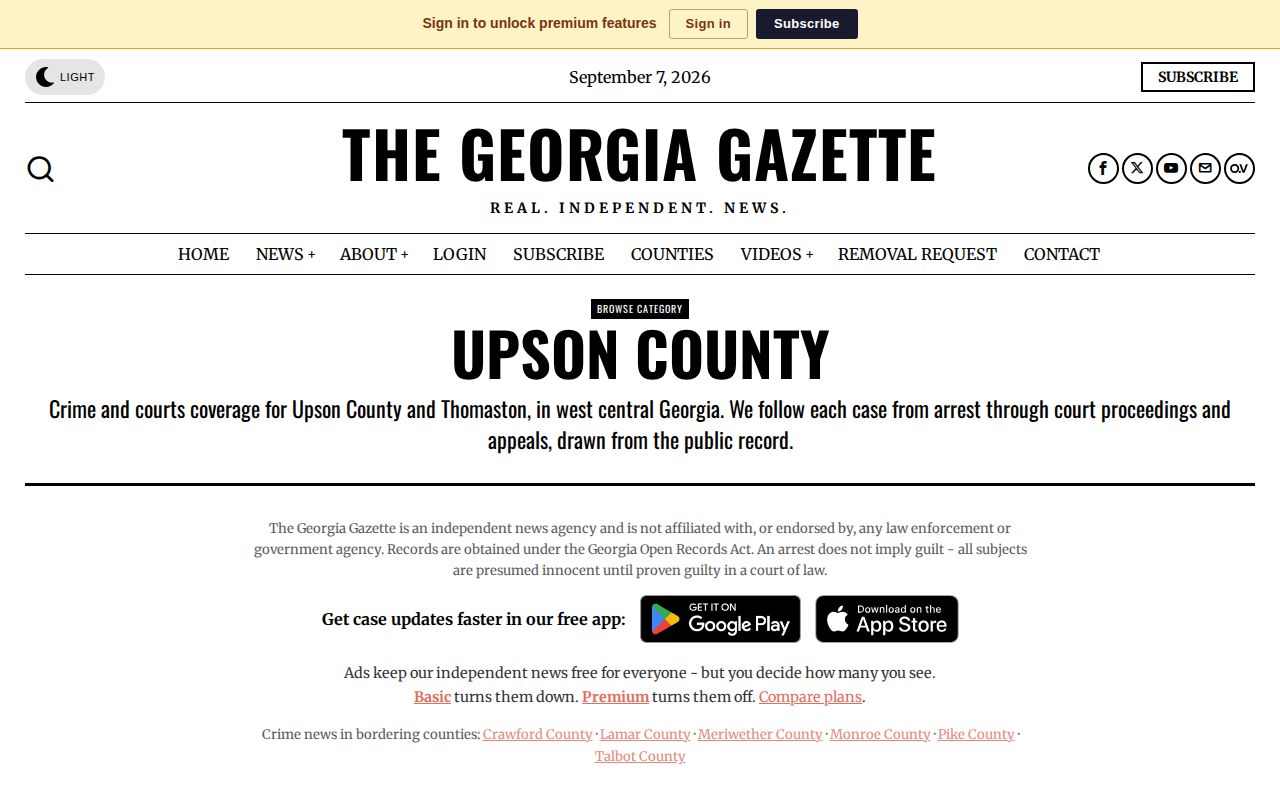
Third-party pages pick and choose what they republish. Check claims against the Sheriff's feed and the court record. RecentlyBooked keeps an unofficial Upson section too, and its Upson listing page shows exactly why caution pays.
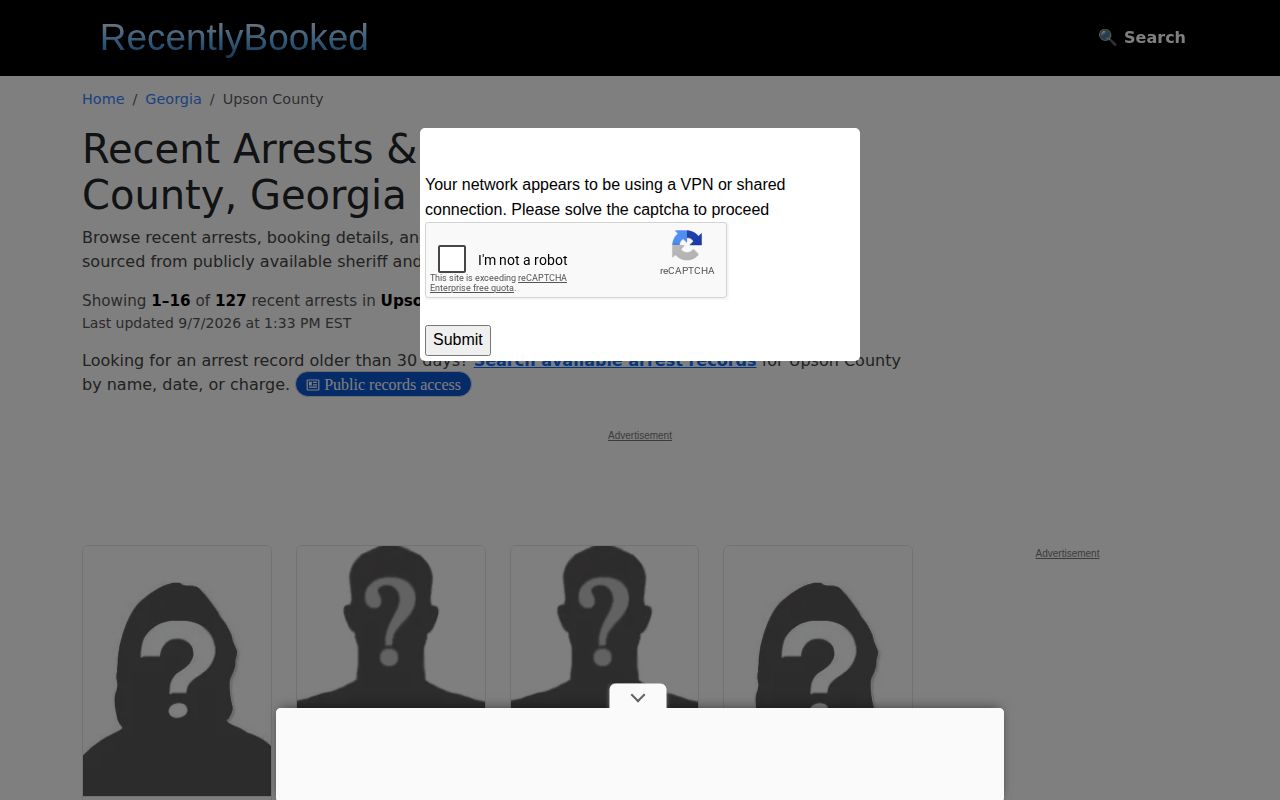
Coverage, corrections, identity matches, and update timing all sit outside county control. An aggregator is a lead, nothing more.
Dynamic Counts Are Not Arrest Trends
No official annual Upson booking series exists. No busiest-day stat exists either. There is no agency-mix dashboard. A live row count depends on the dates chosen, database behavior, and later corrections, so it cannot prove arrests are rising.
For real patterns, request aggregate booking counts by date and arresting agency over a defined period. Ask for machine-readable totals if they exist. Clarify whether repeat bookings count as separate events, and separate arrests from charges and unique people. Document every gap. True crime trends need broader denominators and steady definitions, not screenshots of a shifting jail page.
Photos, Corrections, and Court Follow-Through
Thomaston and Upson County arrest listings rarely come with photos attached. Georgia law lets agencies limit how booking photos are published and shared. So the sheriff's blotter is not a mugshot gallery. It is a record of arrests and bookings, nothing more.
Spotted an error? Keep the official URL, the row text, and the date you pulled it. Then contact the records custodian. To track a real court outcome, find the right docket. The roster's court field is a useful starting point. Superior, Magistrate, Thomaston City, and Juvenile cases each run through separate records systems.
Keep any records request narrow so staff can act on it. Give the person's full name, the approximate arrest or booking date. Add the arresting agency if known. Say exactly what you want. It might be a booking sheet, a jail register entry, an incident record, or something else. A photo request gets separate review under Georgia law. The custodian may redact or withhold protected material.
A news story or aggregator may disagree with the official Upson County date search. Don't merge the two accounts. First confirm they describe the same person, the same arrest, and the same publication date. Then pull the original agency record and the court docket. An old article can add useful history while missing later amendments entirely.